How Many Calories Do You Burn Cleaning Your House?
Turn chores into a workout: move briskly and keep good posture. In 30 minutes you’ll burn roughly 100–300 calories—about 99–166 vacuuming, 187–300 doing kitchen cleanup, 120–205 gardening, and 120–178 playing with kids. Heavier body mass, vigorous scrubbing, stairs, and fewer breaks increase burn. Try lunges while mopping, half-squats for dusting, and load-carrying on stairs (≈6 cal/min). Do 30 minutes five days a week to cut health risks. Want simple ways and tools to enhance it?
Key Takeaways
- Everyday cleaning counts as exercise, lowering mortality by 28% and heart disease risk by 20% when done briskly.
- Typical 30-minute chores burn 100–300 calories: vacuuming 99–166, dishes/kitchen 187–300, gardening 120–205.
- Heavier body mass, higher intensity, longer duration, stairs, and fewer breaks increase calories burned.
- Turn chores into workouts: lunge while vacuuming, half-squat for dusting, alternate hands, tiptoes overhead, carry loads on stairs.
- Track your effort with wearables; Garmin Venu 3, Fitbit Charge 6, Apple Watch 9 log heart rate, active minutes, and calories.
Why Cleaning Your House Can Count as Exercise
130,000 people across 17 countries can’t be wrong: the largest study published in The Lancet found that everyday activities—yes, vacuuming, scrubbing floors, gardening, and walking to work—deliver real health benefits.
When you clean with intention, you stack minutes that lower risk: 30 minutes, five days weekly, links to 28% fewer deaths and 20% less heart disease. That’s real household chores exercise benefits.
Treat cleaning as training. Move briskly, keep posture athletic, and minimize idle pauses.
Active commuting and home tasks help you exceed guidelines without a gym, and higher volumes showed even greater protection. Sitting less matters, too; long sedentary stretches blunt cellular energy.

Average Calories Burned for Common Cleaning Tasks
Ready to turn chores into calorie burners? Use NEAT to map your effort.
In 30 minutes, vacuuming burns about 99 calories at 120 lbs, 124 at 150 lbs, and 166 at 200 lbs. Washing dishes and kitchen cleanup racks up 187 calories at 125 lbs and 300 at 200. Changing linens for 30 minutes is similar.
Unpacking boxes uses about 105 at 125 lbs and 155 at 200, more if you’re lifting. Outdoors, a 30‑minute push‑mower session burns ~135 at 125 lbs and 185; raking hits 120–178; weeding 139–205; planting 135–200; dog‑walking 135–200.
Play with kids for 30 minutes to add 120–178. To burn calories while cleaning, track totals and plan sessions by task duration.
Wondering how many calories cleaning home yields? Start today.
Factors That Affect How Many Calories You Burn Cleaning
Those task-by-task numbers are only a starting point—how much you actually burn depends on variables you control. Your body mass drives the math: heavier bodies expend more energy for the same chore.
Intensity matters, too; scrubbing, mopping, or vacuuming with urgency boosts demand. Duration and continuity count—longer, fewer pauses increase totals. Movement quality shifts the load: engaging your core and using full, deliberate ranges recruit more muscle.
Task selection changes the profile; cleaning burns the most monthly calories, while cooking, laundry, and mopping follow. Environment affects effort—stairs, clutter, and tool resistance (heavy buckets, push mowers) add workload.
Music tempo can nudge pace. Finally, frequency compounds everything; a consistent cleaning house workout multiplies weekly expenditure across chores and family activities, including games, gardening, and projects.
Tips to Maximize Calorie Burn While Cleaning
While you’re tackling your to-do list, a few smart tweaks can turn housework into a full-body workout that burns 3–4 times more calories than sitting.
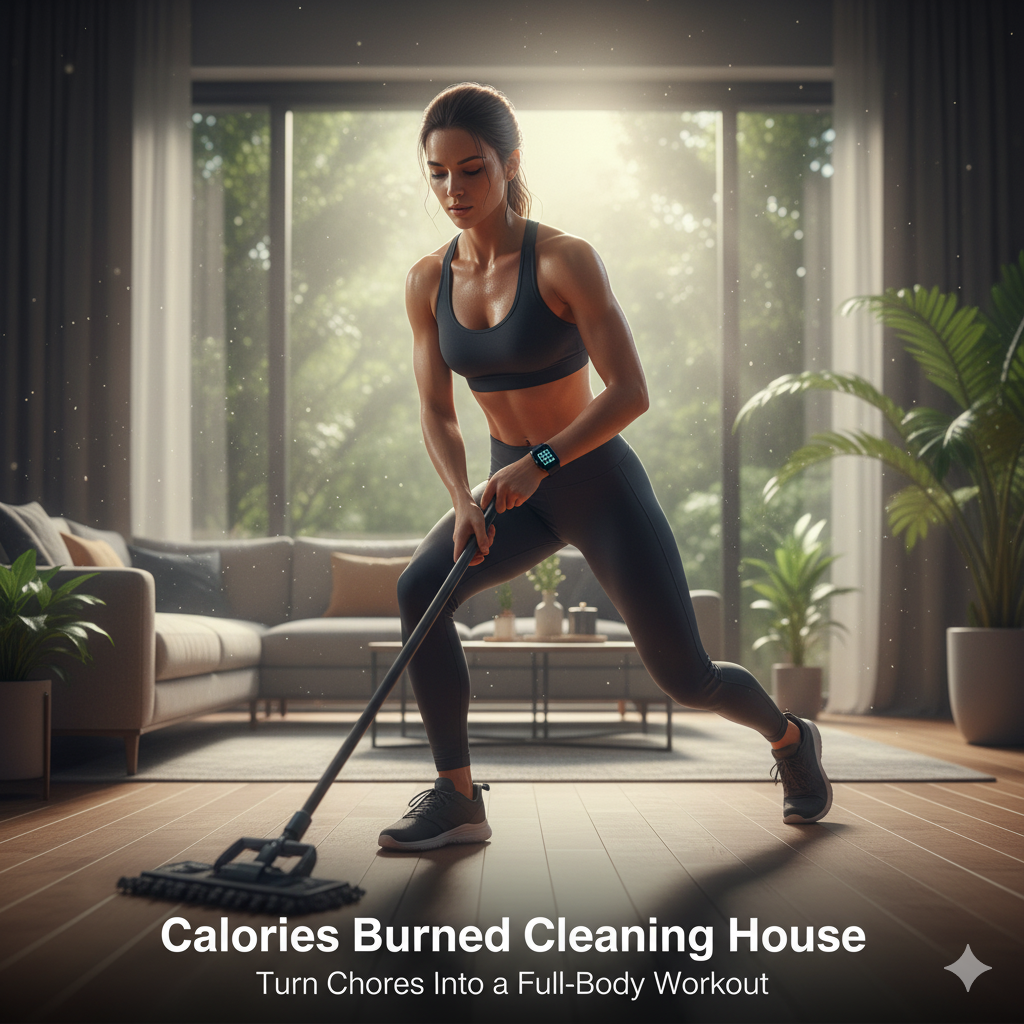
Use lunging passes when vacuuming or mopping: step into a full lunge on each reach, squeeze your glutes, then draw feet together as you pull back. Maintain a braced core for balance and a tighter midsection.
For surfaces, scrub with intent—alternate hands, stand on your toes for overhead spots, and practice single‑leg stances to challenge calves, glutes, and stability.
Dust baseboards from a half-squat to keep legs engaged. When tidying, carry items up stairs; climbing with 1–15 pounds can hit about 6 calories per minute.
Move briskly, rotate tasks, and aim for 45–60 active minutes to surpass 200 calories.
Tracking Your Cleaning Workout with Smart Devices
Because smart devices turn chores into measurable workouts, strap on a fitness tracker, start an “Other” or “HIIT” activity, and monitor heart rate, active minutes, and estimated calories as you vacuum, mop, and climb stairs.
For precision and recovery knowledge, the Garmin Venu 3 shines with accurate HR, GPS, ECG, sleep, and readiness data plus long battery life.
Prefer simplicity? The Fitbit Charge 6 offers reliable heart-rate tracking, stress and sleep scores, and an easy setup.
On a budget, the Amazfit Bip 3 Pro tracks 60+ activities well enough for daily cleaning.
Apple devotees can utilize Series 9’s tight iPhone integration; Android users may favor Samsung Galaxy Watch6.
Tag cleaning sessions, set HR zones, compare weekly load, and progress your pace, breaks, and exertion.

Frequently Asked Questions
Is Cleaning Safe Exercise for Seniors, Pregnant People, or Those With Injuries?
Yes—when you scale intensity, cleaning’s safe for seniors, pregnant people, and those with injuries. Get clearance, keep RPE 3–4, avoid heavy lifting/twisting, use long-handled tools, split tasks, hydrate, wear shoes, stop with pain or dizziness.
What Footwear and Clothing Reduce Strain During Long Cleaning Sessions?
You’ll reduce strain by wearing supportive, slip-resistant sneakers with arch support and cushioned insoles; add orthotics if you overpronate. Choose moisture-wicking, stretchy layers, compression socks, knee pads, and gloves. Avoid floppy slippers and restrictive jeans.
How Can I Prevent Back or Wrist Pain While Cleaning?
Prevent back or wrist pain by hinging at hips, keeping a neutral spine, and engaging your core. Use long-handled tools, neutral-grip handles, and kneepads. Alternate hands, keep loads close, don’t twist, take micro-breaks, stretch wrists/hamstrings.
Can Professional Cleaners Handle Deep Cleaning While I Focus on Lighter Activity?
Yes—delegate deep cleaning to vetted professionals while you’re doing light activity. Choose insured teams like Skilled Maids. Schedule assessment, define scope, set priorities, monitor standards. Track outcomes, adjust cadence, and protect joints with ergonomic tools.
Does Dust and Chemical Exposure Affect Respiratory Health During Vigorous Cleaning?
Yes—dust and cleaning chemicals can inflame airways and reduce lung function during vigorous scrubbing. You’ll mitigate risk by ventilating, choosing low‑VOC products, wearing an N95, wet-dusting microfiber, HEPA-vacuuming, or outsourcing deep cleans to screened professionals.
Conclusion
Turn your tidy-up into training: pick up the pace, brace your core, and use full-range motions. Rotate tasks in intervals, add stairs or lunges, and keep rests short to raise heart rate and output. Protect joints with neutral spine, hip hinges, and supportive shoes. Track effort with a watch or phone to gauge zones and progress. You’ll burn meaningful calories, build strength and mobility, and finish with a cleaner home—and a workout you didn’t skip.